

We build gaming experiences that respect player intelligence.
This isn't a gallery of screenshots. It's a case study archive: the constraints, the dead ends, and the decisions that shaped our flagship titles.
The 'Kaleidoscope' Engine: Forging Tech from Limitation
The mandate for 'Kaleidoscope' was a paradox: deliver a 4-player cooperative AR experience on hardware that was already five years old. We didn't have the budget for high-end phones, nor the luxury of a tolerant framerate. Our constraint wasn't a design challenge—it was a hard technical wall.
Traditional 3D rendering would choke the GPU. Instead, we abandoned polygons entirely. We developed a custom vector-based rendering system. Think scalable UI, not heavy geometry. Assets shrank by 92%, loading times vanished, and the final output shattered light into crystalline geometric patterns—hence the name.
The trade-off? Initial visual fidelity. Our solution was a 'dynamic resolution scaling' algorithm that sacrificed background detail to keep player avatars and UI razor-sharp. The outcome was a silky-smooth experience that felt premium, despite running on legacy devices. The engine is now licensed as a lightweight, high-fidelity solution for other studios.
Evidence Dossier
"We stopped trying to render a world. We started drawing one." – Lead Engineer
Network latency shattered the illusion of shared space. We solved it with predictive animation, masking lag behind smooth motion.
- 92% asset size reduction
- Predictive lag masking
- Patent-pending vector renderer

Final render output: geometric light refraction.
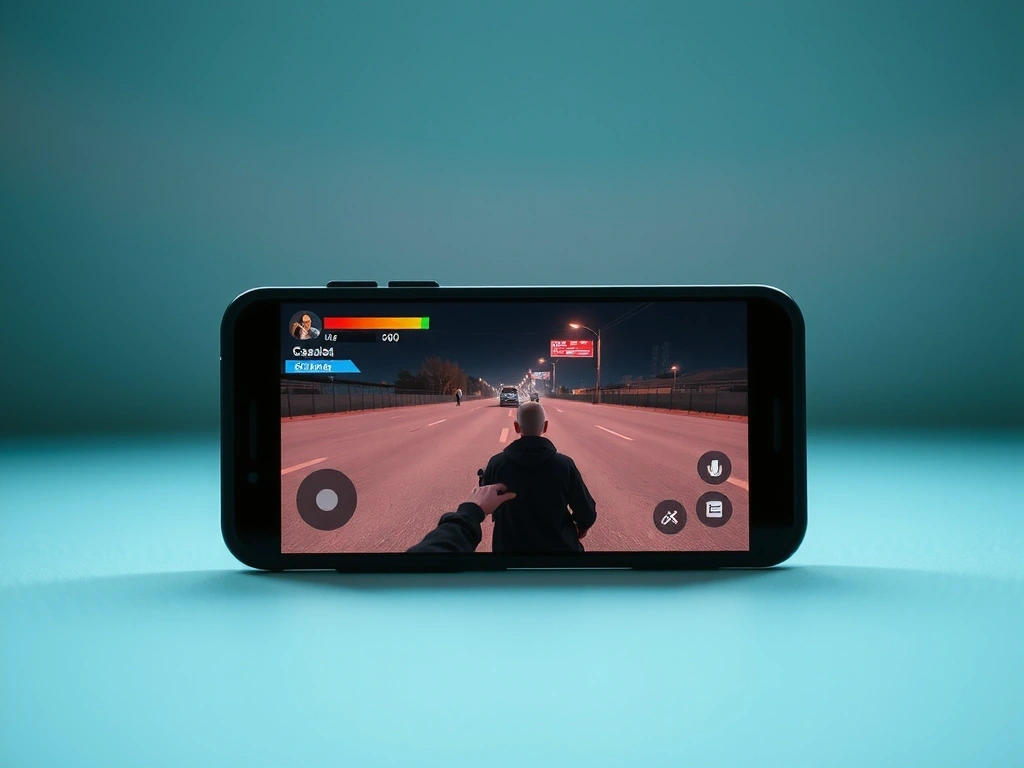
Dynamic scaling prioritizes player avatars over background detail.
The 'Aether' Framework: Monetization as a Trust Mechanism
For 'Aether,' our social puzzle game, we rejected the industry standard of optimizing for Average Revenue Per User (ARPU). Our primary metric became Player Return Rate After 30 Days. This reframe turned a business problem into a design challenge: how do we make players want to come back without feeling manipulated?
The answer was a 'time-gated' progression system. Patience, not payment, was the accelerator. We tested a 'Support the Studio' one-time purchase against a complex loot box system. The transparent option outperformed the opaque one by 40% in long-term retention, validating our thesis that player trust is a renewable resource. We replaced 'energy' mechanics (a common pitfall causing frustration) with a 'stamina' system that regenerates passively, respecting the player's time.
Glossary: The Monetization Mindset
- Frictionless Gate
- A point where payment is required to proceed. Pro Tip: It's a failure state for design, not a revenue stream.
- Trust Bridge
- A moment of transparency (e.g., showing odds, explaining value). Pro Tip: Builds resilience against future pricing changes.
- Time-to-Value
- How long a player waits for a meaningful reward. Pro Tip: Shorten this through design, not just transactions.
Trade-Off Matrix

Core 'Aether' loop: Play naturally, wait, unlock. No energy meters.
"Our portfolio isn't a collection of finished products; it's a map of decisions. Every constraint forced a creative breakthrough. The metric for success isn't downloads, but the elegance of the solution to the hardest problem in the brief."— Winetra Creative Lead

The Alchemist's Code: Translating Loneliness
"The brief: 'Make the player feel cosmic loneliness.' The first 13 prototypes were failed. The 14th—a physics-based gravity well where pulling closer felt 'dangerous'—was the breakthrough. It wasn't a mechanic; it was a feeling."
- • Awe is silent
- • Proximity = emotion
- • Space is a character
- • 60 FPS on mid-range
- • No combat focus
- • Procedural only
- • Player telemetry showing empty space is boring
- • A new physics interaction emerges
*The 78% retention in the 'calibration chamber' (a space we nearly cut) validated the core emotional thesis.
Questions Investors Should Ask
A framework for evaluating creative game development partners.
We prioritize Day-30 retention and organic community growth over initial download spikes. A healthy game is a living one.
We identify the 'one non-negotiable mechanic' early. Everything else is a negotiable surface layer.
We design for the lowest common denominator first, then enhance. A feature only exists if it works on a 5-year-old phone.
Via retention curves after monetization events, support ticket sentiment, and community 'giving' behavior.
Cultural adaptation over translation. We rebuild UI flows and narrative logic for target markets.
We document every compromise. The 'Kaleidoscope' engine was born from documented tech debt that became a creative asset.
Your Challenge, Our Process.
Bring your concept to our studio. We'll map the constraints, define the core loop, and build the documentation that makes it real.