The Winetra Engine: Our Approach to Technical Fidelity
We don't build games; we craft interactive systems. Our technology philosophy is defined by a simple but uncompromising premise: every millisecond, every pixel, every line of code must serve the player's immersion. This isn't a roadmap—it's a manifesto of constraints.
| Abstraction Level | Strategic, Not Arbitrary |
| Performance Target | 60fps on Mid-Tier Devices |
| Code Review | 24h Aesthetic Linter |
| Core Dependency | None (No App Stores) |
| User Priority | Latency > Graphics |
The Code as Canvas: Aesthetic Rigor in Development
We treat every line of code not as a functional requirement, but as a brushstroke in a larger composition. This mindset dictates our entire refinement process. Our "Refinement Ritual" mandates a 24-hour code review period for any feature—not just for logical correctness, but for visual and structural harmony. A junior developer's first commit is typically a UI polish on an existing module, a deliberate practice to instill the principle that interface and logic are inseparable.
To enforce this, we maintain a living "Aesthetic Linter"—a custom toolchain that flags inconsistencies in naming, commenting style, and component structure. It's not about restricting creativity; it's about ensuring that code is as readable to another human as it is executable by the machine. We accept a 15% longer development cycle for projects where visual fidelity is paramount, trading raw speed for enduring quality and collaborative clarity.
This 24-hour ritual is a trade-off. It prioritizes long-term maintainability and team alignment over rapid iteration. For projects with extremely volatile requirements (e.g., a live event "seasonal" game mode), we apply a modified version: a 4-hour "sprint review" focused solely on the aesthetic linter's top 3 flags. It's a constraint, not a dogma.

Annotated snippet from a core animation module. The peach highlight denotes aesthetic linter compliance.
The Architecture of Play
Off-the-shelf solutions create off-the-shelf experiences. Our stack is built on bespoke patterns that prioritize player agency and system integrity over developer convenience.
Stateful Orchestration
Complex game state is managed through a single, immutable source of truth (Event Sourcing). This avoids fragmentation bugs where player progress diverges across UI states.
"We replay the user's session from events, not from snapshots. This is how we guarantee replay integrity." — Lead Architect
Off-the-Shelf UI Kits
Using generic UI frameworks for core gameplay elements creates a "cookie-cutter" feel. Players subconsciously recognize components from other apps, breaking immersion.
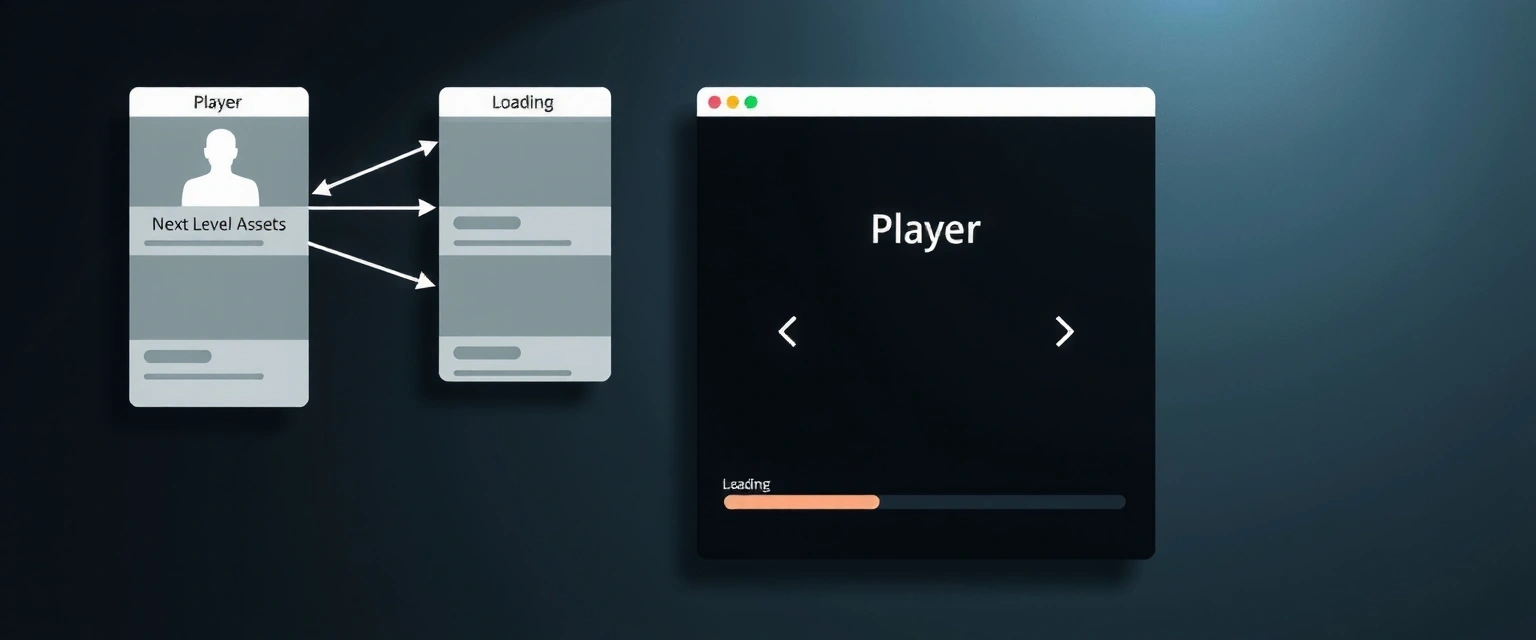
Kinetic Feedback
- • Definition: Micro-interactions (haptic, visual, audio) that confirm player action within 50ms.
- • Pro Tip: It's not about the flash; it's about the latency. A 100ms delay feels broken, even with the prettiest animation.
The Decision Lens
Before we commit to a technical direction, we evaluate it against a non-negotiable set of criteria. This is our internal checklist, which determines whether an idea moves from concept to code.
Aggressive Push vs. Defensive Hold
| Factor | Push | Hold |
|---|---|---|
| Risk | High | Low |
| Reward | High | Low |
| Our Choice | When Core Loop is Solid | During Architecture Phase |
We defer aggressive innovation until the foundational "defensive hold" is proven stable.
Our Development Ethos
These three pillars are not marketing points; they are architectural constraints that filter every decision from concept to launch.
Intentional Abstraction
We build layers of abstraction only when they serve the creative vision, not for theoretical purity. A new class or module must justify its existence with a clear, narrative purpose.
Empathetic Performance
Optimization is not for lab benchmarks. We profile for the user's device and context—a 3G connection in a crowded tournament venue, a shared tablet in a classroom. If it doesn't work there, it doesn't ship.
Narrative Code
Code should tell the story of the player's journey. We structure systems with clear 'plot points' (major decisions) and 'climaxes' (high-stakes moments), making the logic transparent to both the developer and the player.
A project that violates any of these pillars is automatically flagged for a full architectural review. This sometimes means we decline technically simple projects that lack a strong narrative core.
The Winetra Ecosystem
Hover over the nodes to reveal their core function. This is not a marketing diagram; it's our operational map.
Ready to build a system that plays back?
Our development ethos is not for every project. It's for creators who believe that technical systems can be crafted with the same care as the worlds they represent.
Development Methodology: A Timeline
Narrative Blueprint
Code structure is mapped to the player's emotional journey before a single function is written.
Kinetic Core
Build the feedback loop. Every input must have a satisfying, sub-50ms response.
Stateful Orchestration
Layer the complex game state using a single, immutable source of truth.
Aesthetic Linter Pass
Refinement ritual. 24-hour review for visual harmony and narrative coherence.
Principles Applied Across Genres